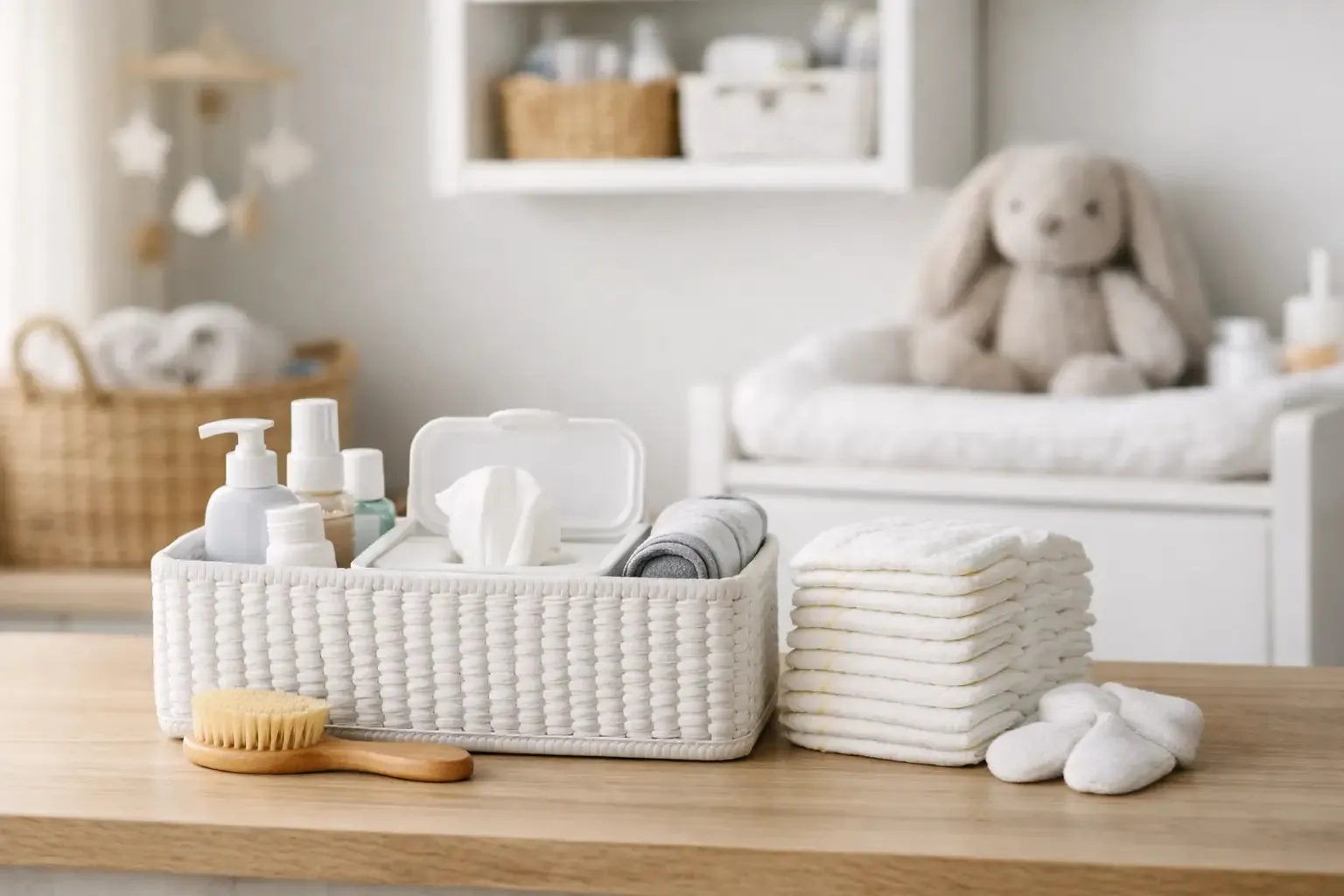
That moment when you reach for a diaper with one hand, hold a wiggly baby with the other, and realize the wipes are across the room is usually when figuring out how to organize diaper supplies stops feeling optional.
It just needs to make daily changes faster, cleaner, and less stressful.
For most homes, the best system is the one that matches your routine.
If you change diapers in the nursery most of the time, your supplies should stay there.
If you move between the living room, bedroom, and car, you need a setup that spreads essentials across a few key spots without creating clutter.
The goal is simple: keep what you use most within reach, and keep backups easy to find.
How to organize diaper supplies without overcomplicating it Start by thinking in zones instead of one big diaper stash.
Most parents do better with one main station and one or two smaller backup stations.
That keeps the nursery from becoming overloaded and helps avoid those last-minute searches when you are in another room.
Your main station should hold your everyday essentials.
That usually means diapers in the current size, wipes, diaper cream, a changing pad, a couple of spare outfits, burp cloths, and a small bag or bin for dirty clothes.
If you use diaper rash cream regularly, keep it out with the diapers instead of tucked into a drawer.
The same goes for anything you reach for during almost every change.
A small caddy in the living room or your bedroom can hold a few diapers, travel wipes, cream, and a spare onesie.
You do not need a full duplicate setup everywhere.
Too many duplicates make it harder to notice when you are running low.
Parents often buy organizers before deciding what needs organizing.
First narrow your supplies to what belongs in each zone, then choose bins, caddies, or drawer dividers that fit the space.
Choose the right diaper station for your space Not every home has room for a full changing table, and not every family wants one.
A dresser with a changing topper can work just as well.
In smaller spaces, a rolling cart or compact storage caddy often makes more sense because it can move where you need it.
If your changing area is in a nursery, drawers are usually the cleanest option.
Put daily items in the top drawer or top shelf so you can reach them quickly.
Keep diapers in one section, wipes and creams in another, and clothing backups in a third.
Separating categories matters more than having a lot of storage.
If you change diapers in shared spaces, a portable caddy is often the better choice.
Look for one with enough room for a day’s worth of basics, but not so large that it turns into a catch-all.
A caddy is especially useful during the newborn stage, when you may be changing diapers in whatever room you happen to be in.
They offer more space than a caddy but still move easily from room to room.
Open carts are convenient, but they can make a room look busy fast.
If that bothers you, use matching bins or baskets on the shelves to keep the setup looking more controlled.
What to keep in your main diaper station A diaper station works best when it supports your real routine, not an ideal version of it.
If you only use certain products once a week, they should not take up prime space.
Keep your most-used items front and center.
Diapers and wipes should be the easiest things to grab.
Cream, disposable bags, a changing pad cover, and a spare outfit should be close behind.
If blowouts happen often, keep two spare outfits instead of one.
Bath products, medicine, and nail care should usually live somewhere else unless your storage is extremely limited.
Mixing too many baby categories into one area makes restocking harder and daily use slower.
A small trash can or diaper pail near the station is worth the space if you have room.
If not, keep disposable bags nearby so you are not walking a messy diaper across the house.
The easiest way to organize diaper supplies by size and use Diapers become harder to manage when you have multiple sizes, overnight options, swim diapers, or training pants all in the same space.
Keep only the current size in your daily station.
If the next size up is waiting in the wings, store it nearby but not mixed in with the active stack.
Labeling bins can help, especially if more than one adult handles diaper changes.
Even a basic label like Size 3 or Overnight makes the whole setup easier to maintain.
Open packs should stay in your active stations.
Unopened refill packs should go in a backup storage area, like a closet shelf or lower dresser drawer.
This avoids crowding the changing space with too much product while still keeping extra supplies close.
If you stock up during sales, resist the urge to cram every diaper box into the nursery.
Bulk storage is useful, but only if it does not get in the way.
A hallway closet, linen shelf, or under-bed bin often works better for surplus inventory than the changing area itself.
Set up a simple restocking system A diaper station usually falls apart because nobody knows what is low until it is empty.
The fix is a very basic restocking habit.
Choose one day each week to check diapers, wipes, cream, and spare clothes.
Refill your smaller stations from your main stash, and refill the main stash from your backup storage.
This takes a few minutes and saves a lot of scrambling later.
It also helps to keep a refill line in mind.
For example, when the diaper stack gets down to one sleeve or the wipes bin has two packs left, it is time to restock.
You do not need a detailed inventory system.
You just need a clear point where low stock becomes a refill signal.
If more than one person shops for baby supplies, keep your system visible and easy to follow.
Clear bins, simple labels, and one designated backup area make it much easier for everyone to stay on the same page.
Small-space tips that actually help When space is tight, organization has to work harder.
The good news is that diaper supplies do not need much room if you keep only the essentials nearby.
Shelves above a dresser, stackable bins inside a closet, or narrow carts beside a changing table can all create usable storage without taking over the room.
Drawer dividers are also useful because they stop small items from sliding into one messy pile.
Try to avoid storing loose items directly on open surfaces.
Even a tidy stack of diapers can quickly look chaotic once wipes, cream, and extra clothes start gathering around it.
Baskets and bins create visual order and make cleanup faster.
There is also a trade-off between accessibility and appearance.
Open storage is quick to use, while closed storage often looks neater.
If your diaper station sits in a shared room, you may prefer bins with lids or drawer storage.
If speed matters most, open-top baskets are easier during busy changes.
Don’t forget the on-the-go diaper setup Home organization works better when your diaper bag follows the same logic.
Keep a grab-and-go set of basics packed at all times so you are not pulling supplies from your home station every time you leave.
A simple travel setup usually includes a few diapers, a travel wipe pack, cream, a changing pad, disposable bags, and one spare outfit.
Refill it as soon as you get home or during your weekly restock.
That keeps your home system from getting picked apart one item at a time.
Some parents also like keeping a small emergency diaper kit in the car.
This can be helpful, especially for longer drives or unpredictable schedules.
Just check it often so sizes and clothing stay current.
When to change your system The best diaper setup at two months may not be the best one at ten months.
As your baby grows, your routine changes.
You may move from frequent changes in one room to quick changes wherever your child happens to be.
You may need fewer clothing backups but more overnight products.
You may start mixing in training items later on.
Organizing diaper supplies is not a one-time project.
It works best when you adjust it to fit the season you are in.
If your current setup feels annoying every day, that is usually a sign it needs a small reset, not a complete overhaul.
Sometimes moving a bin, simplifying what stays out, or creating one better backup station is all it takes.
Just Shop’s practical approach works well here too - choose useful products that make everyday routines easier, and skip anything that adds more effort than value.
A good diaper system should help your day move a little faster and feel a little lighter.
If you can change a diaper without hunting for supplies, your setup is doing its job.