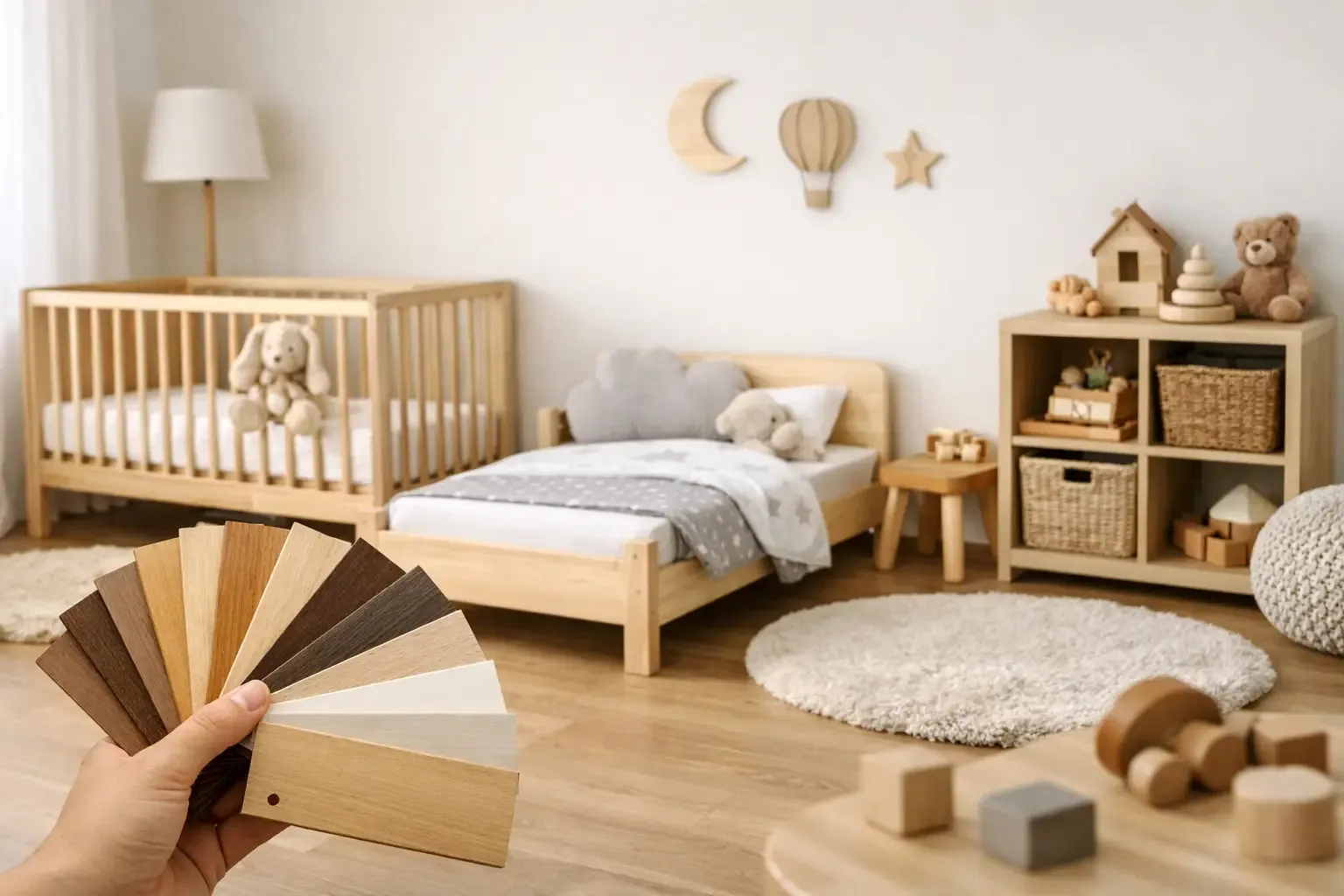
A toddler’s room gets messy fast when the furniture is working against you.
A bed that sits too high, storage your child can’t reach, or a chair that looks cute but never gets used can turn a simple room into extra work for parents.
If you’re wondering how to choose toddler room furniture, the best place to start is with real daily routines, not a picture-perfect setup.
The right furniture should make life easier.
It should help your child move safely, play comfortably, and start doing small things on their own.
It also needs to fit your space, your budget, and the fact that toddlers change quickly.
How to choose toddler room furniture for real life Before you pick colors, themes, or matching sets, think about how the room will actually be used.
Is it mainly for sleep? Will your toddler also read, play, and get dressed there? Do you need the room to handle toys, books, and extra clothes without feeling crowded? That matters because toddler furniture works best when every piece has a job.
A small room usually needs fewer, harder-working items.
A larger room gives you more flexibility, but that does not mean you need to fill it.
Too much furniture can make the room harder for a toddler to move through safely.
Start with the basics: a bed, storage, and one or two comfort or activity pieces if space allows.
In most cases, those extras might be a small bookshelf, a child-sized table, or a soft chair.
If an item does not support sleep, storage, reading, dressing, or play, it may not earn its floor space.
Start with size and layout Furniture dimensions matter more in a toddler room than many parents expect.
Toddlers need open floor space to walk, climb carefully, and play.
Adults also need room to help with bedtime, change sheets, and clean up without squeezing between oversized furniture.
Notice where the door swings, where the closet opens, and where windows sit.
A dresser that technically fits may still block movement or make the room feel tight.
It also helps to leave clear paths between the bed, door, and storage.
That makes the room easier to use during the day and less frustrating at night.
If your child wakes up and tries to get out of bed on their own, a clean layout reduces bumps and trips.
Choose a bed your toddler can use easily For many families, the bed is the first big decision.
Some transition from a crib to a toddler bed, while others move straight to a low twin bed.
The right choice depends on your child’s size, sleep habits, and how long you want the furniture to last.
A toddler bed feels smaller and often looks less intimidating for a child who has just left the crib.
It also sits low to the ground, which helps with safety and independence.
Many kids outgrow toddler beds fairly quickly.
A low twin bed gives you more long-term value and can be more comfortable for story time or lying next to your child during rough nights.
But if it sits too high, it can be harder for a toddler to climb in and out safely.
If you go this route, keep the height manageable and avoid bulky frames.
Guardrails can help during the transition period, especially for active sleepers.
A bed tucked into a corner may feel more secure for some toddlers and leave more open floor space.
Put safety ahead of style A well-designed room can still look nice, but safety should make the final call.
Toddlers pull, climb, push, and test everything.
Furniture that seems stable during adult use may be very different in the hands of a curious two-year-old.
Look for sturdy construction and smooth finishes.
Sharp corners, wobbly legs, or lightweight shelving can create problems fast.
Dressers, bookcases, and storage units should be secured to the wall when needed.
That is especially important if your child likes to climb drawers or use shelves as steps.
Pay attention to materials and surfaces too.
Easy-clean finishes are practical for everyday use, and simple shapes are often safer than decorative details.
Soft-close drawers can be helpful, but they are not essential if the furniture is otherwise solid and easy to manage.
Think from your toddler’s height One of the easiest ways to judge furniture is to view the room from your child’s level.
Can they reach their books without pulling on a shelf? Can they help put toys away? Can they sit in a chair with their feet close to the floor? Furniture that fits your toddler’s size supports independence.
That does not mean everything has to be child-sized, but the pieces they use every day should feel accessible.
Low open storage usually works better than deep bins with heavy lids.
Front-facing bookshelves make it easier for toddlers to choose books and put them back.
The more your child can use the room without constant adult help, the more useful the furniture becomes.
Focus on storage that stays manageable Toddler rooms collect a surprising amount of stuff.
Toys, stuffed animals, pajamas, seasonal clothes, books, blankets, and random treasures can pile up quickly.
Good storage is not about fitting everything into the room.
It is about making cleanup and access easier.
Open bins, low cubbies, and simple baskets are often the most practical choice.
They make it easy for parents to sort items and for toddlers to participate in cleanup.
Closed cabinets can look tidier, but they may be less convenient for daily use, especially if small hands struggle with doors or hardware.
A dresser is worth considering if the room needs everyday clothing storage.
Just avoid extra-large pieces that overpower the space.
In smaller rooms, one medium dresser and one bookshelf may do more than a full matching furniture set.
It helps to store the most-used items at the easiest height.
Pajamas, books, and favorite toys should be simple to grab.
Less-used items can go higher up or in the closet.
That small choice can make mornings and bedtime smoother.
Don’t overbuy for a stage that changes fast This is where many parents get stuck.
You want the room to feel finished, but toddlers grow and their needs change quickly.
A piece that feels essential today may be unnecessary a year from now.
That is why flexible furniture often gives better value than heavily themed or highly specialized pieces.
A neutral dresser, a simple bookshelf, and a low bed can work across multiple stages.
A novelty-shaped chair or oversized toy chest might feel fun at first but see less use over time.
There is also no rule that says the room has to be fully done in one shopping trip.
In many homes, it makes more sense to start with the main items and add smaller pieces after you see how the room functions.
That approach can save money and prevent clutter.
Match the furniture to your child’s routine The best toddler room setups reflect how a family actually lives.
If bedtime reading is part of your routine, a low bookshelf and comfortable reading spot make sense.
If your toddler plays mostly in the living room, you may not need a table and chairs in the bedroom.
If getting dressed is a daily battle, accessible clothing storage may matter more than extra toy storage.
This is where practical shopping beats aspirational shopping.
A beautiful room is nice, but a useful room is what keeps mornings moving and evenings calmer.
Parents usually feel happier with furniture that solves one real problem than with furniture that simply fills a design plan.
If you are shopping online, keep product photos in perspective.
A staged room can make furniture look smaller or more spacious than it really is.
Check measurements carefully, compare them to your room, and think about how each item will function next to what you already have.
How to choose toddler room furniture on a budget A bigger budget gives you more options, but it does not automatically lead to a better room.
When money is tight, spend first on the pieces used every single day.
That usually means the bed and primary storage.
After that, consider what adds the most convenience.
A bookshelf can encourage reading and cut down on floor clutter.
A small table can be useful for coloring and quiet play, but only if your child will actually use it.
Rugs, wall decor, and matching accessories can wait if the room still needs better function.
It is also smart to compare short-term and long-term value.
A less expensive item is not always the better deal if it needs replacing quickly.
On the other hand, paying more for features you do not need is not practical either.
For most families, the sweet spot is simple, sturdy, and easy to clean.
A curated store can make the process easier because you spend less time sorting through products that do not fit family life.
That is often more helpful than having endless options.
Keep comfort simple A toddler room should feel calm, not crowded.
Once you have safe basics, enough storage, and a layout that works, you may not need much more.
Soft textures, a few favorite books, and furniture your child can use comfortably often do more for the room than extra decorative pieces.
If you are deciding between furniture that looks impressive and furniture that makes the day easier, pick the easier option.
They need a room that works for sleeping, playing, and growing with a little less stress for everyone.