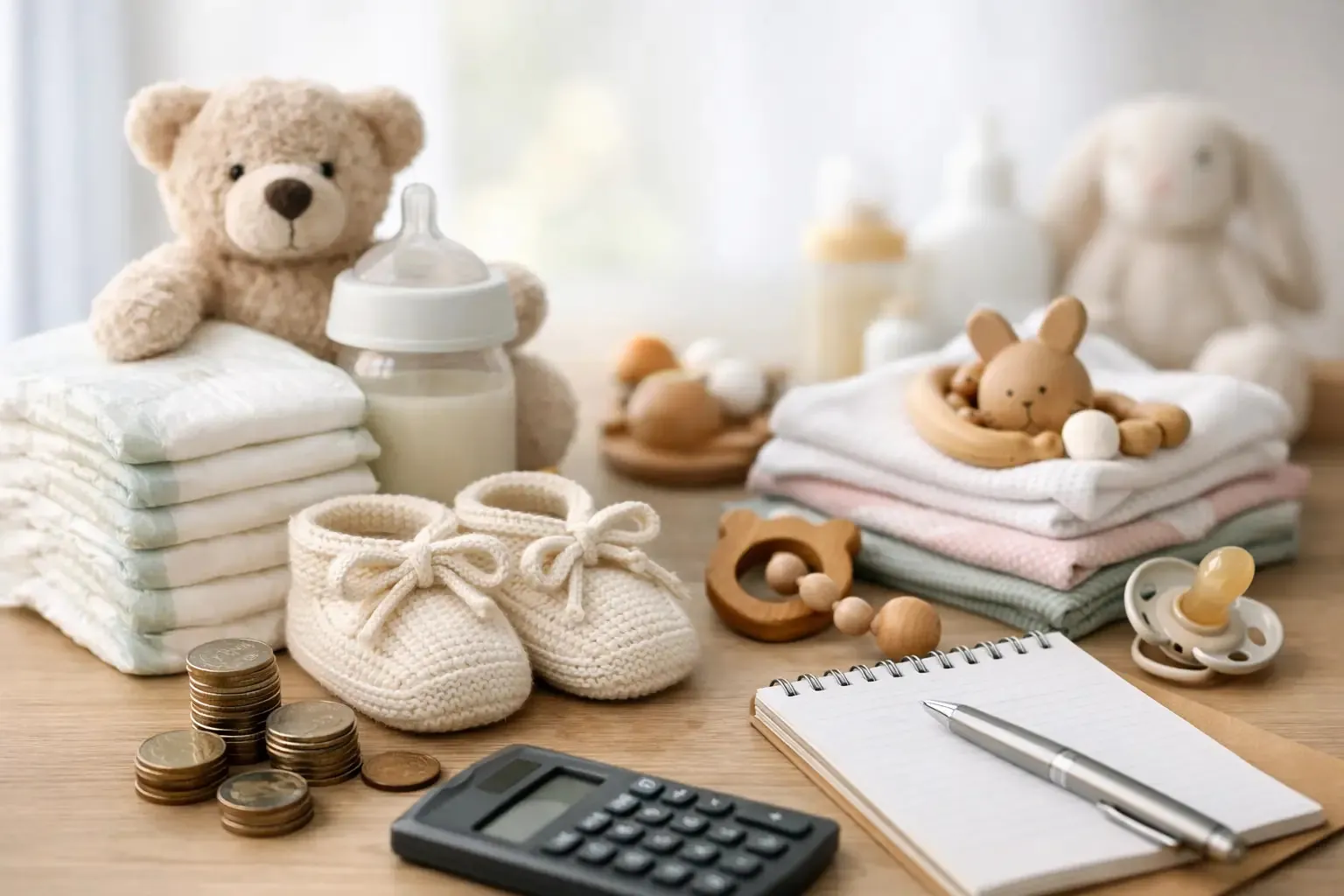
Sticker shock usually starts with the first registry draft.
A few clicks in, many parents realize the real question is not just what to buy, but how much do baby essentials cost once you add up the daily basics, bigger gear, and the repeat purchases that keep coming every month.
The short answer is that baby essentials can cost anywhere from around $3,000 to $10,000 or more in the first year, depending on your choices.
Some families keep things simple with budget-friendly basics, while others spend more on convenience, premium brands, extra gear, or nursery furniture.
The good news is that there is a big difference between what babies truly need and what marketing says they need.
How much do baby essentials cost in the first year? For most families, the first-year budget breaks into two parts: one-time purchases and ongoing monthly costs.
One-time purchases usually include a car seat, stroller, crib or bassinet, mattress, baby monitor, high chair, and a starter wardrobe.
Ongoing costs typically include diapers, wipes, formula if needed, baby toiletries, replacement clothing, and feeding supplies.
A lean first-year budget can land closer to $3,000 to $4,500 if you buy only the basics, choose lower-priced items, accept hand-me-downs, and avoid overbuying.
A more typical middle-range budget often falls between $5,000 and $7,500.
A higher-end budget can easily pass $10,000 if you choose premium gear, buy new for everything, or add items that are helpful but not strictly necessary.
That number also changes based on your lifestyle.
If you live in a small apartment, you may skip bulky gear.
If you travel often, you might pay more for lightweight strollers and portable sleep products.
If family and friends help with gifts, your out-of-pocket cost may drop a lot.
The biggest baby expenses to expect The large upfront items usually take the biggest bite out of your budget.
A rear-facing infant car seat may cost around $100 to $300, while a convertible car seat can run from about $150 to $400.
A stroller can be as low as $80 or as high as $1,000, though many parents find a solid option in the $150 to $350 range.
A crib may cost roughly $150 to $500, and a crib mattress often adds another $50 to $150.
Some parents start with a bassinet first, which can range from $80 to $250 or more.
If you go with a simple, safe setup, this category stays manageable.
If you buy multiple sleep products for different rooms, it climbs quickly.
Nursery and feeding furniture can also add up fast.
A changing table, dresser, rocking chair, or glider are useful for many households, but they are not all mandatory.
A high chair usually becomes relevant later in the first year and often costs between $70 and $250.
Babies outgrow sizes quickly, and that can trick parents into overspending.
A practical starter wardrobe may cost around $150 to $300 if you buy basics in small batches.
If you buy lots of outfits before the baby arrives, there is a good chance some of them will barely get worn.
Monthly baby essentials cost more than many parents expect Once the bigger purchases are out of the way, recurring costs become the real budget story.
Depending on brand, size, and how often you shop sales, diaper costs often land between $70 and $120 per month.
Feeding can be one of the biggest variables.
Breastfeeding can lower direct product costs, but it is not always free in practice.
Nursing bras, breast pads, storage bags, pumps, and bottle supplies can still add up.
Formula-fed babies often cost more per month, with formula expenses commonly ranging from $100 to $250 or higher depending on brand and the baby’s needs.
Baby toiletries and health basics usually stay modest, but they still matter.
Think diaper cream, baby wash, lotion, nail care, a thermometer, and medicine basics.
This category may average $15 to $40 a month, with occasional spikes when you need to restock several items at once.
Clothing replacement is another repeating cost.
Even if you start with gifts, babies need fresh sizes every few months.
Other months you may need sleepers, socks, seasonal layers, and a new round of bodysuits all at once.
A realistic baby budget by category If you want a practical planning number, a middle-range budget might look something like this.
Gear and furniture could total around $1,500 to $3,500 in the first year.
Diapers and wipes may run $1,000 to $1,500.
Feeding supplies and formula can range from a few hundred dollars to more than $2,000.
Bath, health, and baby care basics might add another $150 to $400.
That means many families land in the middle not because they buy luxury items, but because small categories stack up.
A baby bottle set here, extra crib sheets there, a travel stroller later, and suddenly the budget looks very different from that first shopping list.
What babies actually need versus what is nice to have This is where parents can save the most.
Essentials are the items tied to safety, feeding, sleep, diapering, and basic clothing.
That includes a safe car seat, a safe sleep space, diapers, wipes, feeding supplies, weather-appropriate clothes, and a few simple care items.
Wipe warmers, bottle sterilizers, nursery decor, multiple baby carriers, special loungers, and extra furniture can all be useful for some families, but they are not universal needs.
The challenge is that these extras often seem small on their own.
Together, they can add hundreds or even thousands of dollars.
A good rule is to buy for your first few weeks, not your whole first year.
Once the baby arrives, it becomes much easier to tell what fits your routine and what would just take up space.
How much do baby essentials cost if you shop smart? If your goal is to keep spending under control, timing and selectivity matter more than chasing the absolute cheapest option.
Safety items like car seats and mattresses are worth buying carefully from trusted sources.
For many other categories, you can save by choosing simple designs, buying only what you will use soon, and avoiding duplicate products that solve the same problem.
Registry gifts can cover a surprising share of your first-year basics if you build the list around practical items instead of novelty products.
Diapers, wipes, feeding tools, crib sheets, muslin blankets, and basic clothing usually give you more real value than decorative nursery pieces.
Newborn needs are different from six-month needs.
You do not need every feeding accessory, every size of clothing, and every developmental toy before the baby is born.
Buying in phases spreads out the cost and cuts down on waste.
For families who want a simpler shopping experience, a curated store can make a difference.
Instead of scrolling through endless options, you can focus on practical products that fit real daily routines, which often leads to better buying decisions and fewer impulse purchases.
Where budgets often go off track The most common mistake is overpreparing.
New parents naturally want to be ready for everything, but babies are unpredictable.
Some never use the expensive gadget that looked essential at 2 a.m. during a late-night shopping session.
Another issue is buying premium by default.
Higher prices do not always mean better fit for your home or routine.
Sometimes a straightforward, well-made basic product does the job just as well as a trendier version with extra features.
Then there is the temptation to buy in bulk too early.
Bulk buys can save money on staples once you know what works.
But stocking up on a specific diaper brand, pacifier type, or formula before your baby arrives can backfire if your baby reacts differently than expected.
Planning a baby budget without getting overwhelmed The easiest way to budget is to separate must-haves from wait-and-see items.
Start with safety, sleep, diapering, feeding, and a small clothing set.
Then create a second list for items you may want later, like a play mat, baby carrier, high chair, or nursery extras.
It also helps to set a range instead of a single number.
For example, you might plan $2,000 for upfront purchases and $150 to $350 per month for recurring essentials, knowing feeding choices can move that number up or down.
A range gives you more flexibility and feels more realistic than chasing one perfect budget.
If you are shopping for value, keep the focus on usefulness.
The best baby purchases are usually the ones that make everyday care easier, hold up well, and fit your space and routine.
That is true whether you are building a full baby checklist or just filling in the basics one order at a time.
A baby does not need a perfect nursery or a huge pile of gear.
What helps most is a small set of dependable essentials, bought with a clear plan and a little room for adjustment once real life begins.