A diaper change usually starts with one small task and turns into a full scavenger hunt.
Wipes are on the dresser, cream is in the bathroom, a clean onesie is somehow downstairs, and the baby is already halfway through protesting the delay.
That is exactly why so many parents look for the best diaper caddy organizers - not because they want one more nursery accessory, but because they want fewer interruptions during a routine they do multiple times a day.
A good diaper caddy keeps the basics in one place and makes them easy to grab with one hand.
It can sit on a changing table, move from nursery to living room, or travel between floors if your home setup changes throughout the day.
The right one helps you stay stocked, organized, and a little less frazzled when timing matters.
What makes the best diaper caddy organizers worth buying The best diaper caddy organizers are simple, but they do a lot of work.
They keep diapers upright instead of slumping into a drawer, separate creams from pacifiers, and give you a dedicated place for the small things that tend to disappear when you need them most.
What matters most is not having the fanciest design.
It is choosing a caddy that fits your routine.
If you change diapers mostly in one nursery, structure and shelf appeal may matter more.
If you move around the house, weight and handles become more important.
If you are building a registry, you may want something neutral enough to keep using after the diaper stage.
A diaper caddy is also one of those products that often ends up doing more than expected.
Many parents reuse it later for feeding supplies, toddler essentials, small toys, books, or car trip items.
That extra flexibility makes it a practical buy instead of a short-term one.
How to choose the best diaper caddy organizers for your home Before comparing styles, think about where the caddy will actually live.
A nursery-top caddy can be a little larger and more structured because it does not need to be carried often.
A caddy for everyday movement should be light, easy to grip, and compact enough to set down on a couch, bed, or floor without tipping.
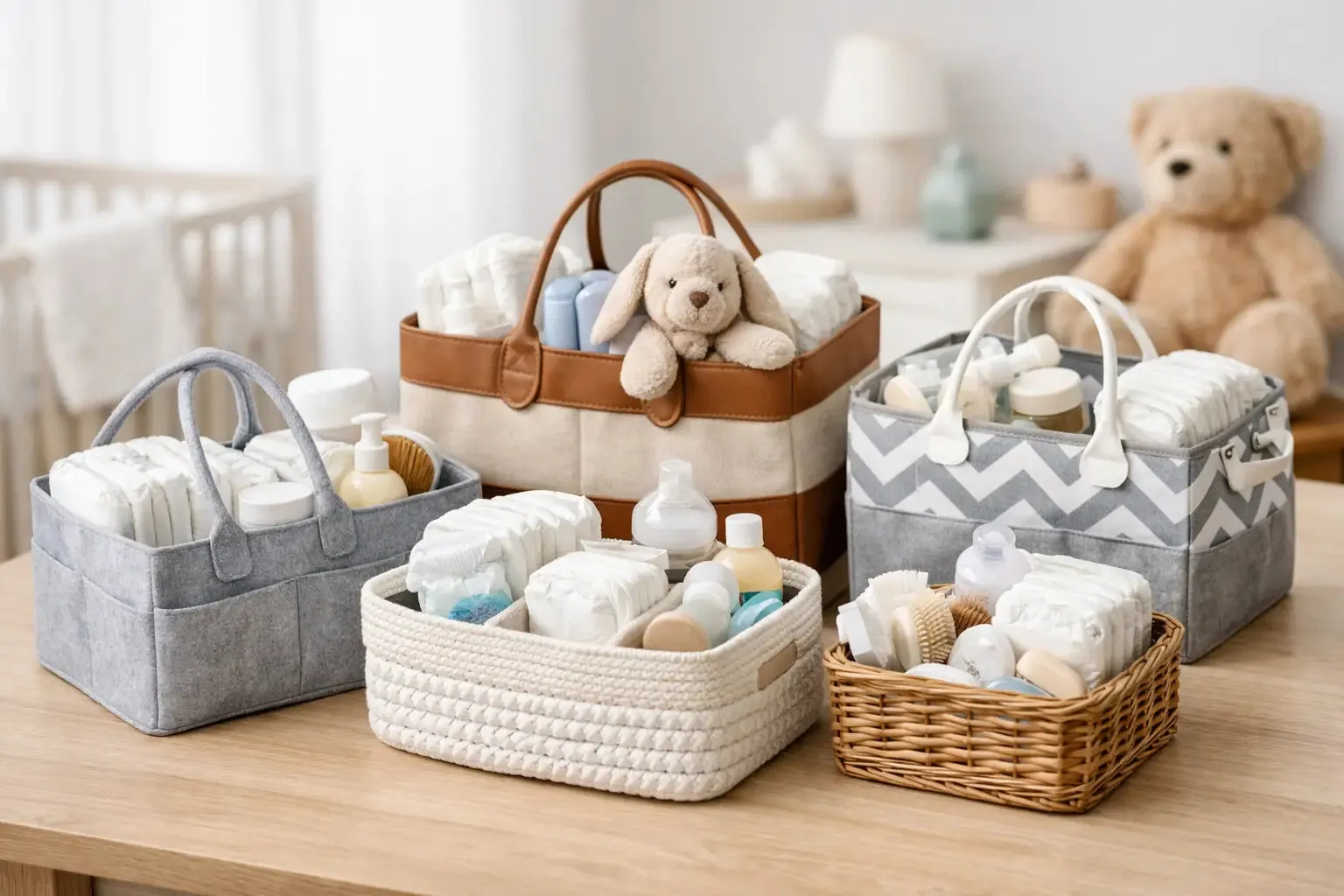
Felt diaper caddies are popular because they are soft, lightweight, and easy to carry.
They also look clean in a nursery and are less likely to scratch furniture.
The trade-off is that some softer felt styles can sag when overloaded.
If you like a more structured shape, reinforced sides or sturdier fabric inserts help.
Plastic caddies are easier to wipe down and may make sense if you want something more utility-focused.
They can be better for messy products, but they often feel less cozy in a nursery setting and may not blend as easily with home decor.
Rope and fabric caddies can look attractive, though some are better for light storage than frequent heavy use.
Compartment layout is another key detail.
A large open center works well for diapers and wipes, while smaller side pockets help with creams, nail clippers, bibs, or spare pacifiers.
Too many compartments can be just as annoying as too few if they limit what you can fit.
Most parents do best with a middle ground - enough separation to stay organized, without forcing every item into a tiny slot.
Features that actually help day to day The best diaper caddy organizers tend to get the basics right instead of piling on gimmicks.
Strong handles matter because this product is often picked up quickly and moved with one hand.
Removable inserts can be useful if you want flexible storage, especially as your baby grows and your needs change.
Exterior pockets are genuinely handy for things you reach for fast, like diaper cream, hand sanitizer, burp cloths, or a small toy for distraction.
A wipeable lining can also save time if lotion leaks or a diaper change gets messy.
Size should match your real routine, not an idealized one.
A very large caddy sounds useful until it becomes heavy and awkward to carry.
A very small one may look neat but run out of room by midday.
If you restock once a day, medium size usually works best.
If you want a caddy for twins or full-day upstairs and downstairs use, a larger option may be worth it. 10 types of diaper caddies parents usually like best There is no single perfect style for every family, but some types consistently work well.
A felt caddy with removable dividers is one of the most popular choices because it balances softness, organization, and flexibility.
It works well on a dresser, shelf, or couch-side table and often looks tidy without trying too hard.
A structured nursery caddy with firm sides is a strong option for parents who want everything upright and visible.
These work especially well if the caddy stays mostly in one place.
A lightweight portable caddy with long handles is ideal for moving between rooms.
If your baby naps in different spaces or you use multiple change spots during the day, portability matters more than looks.
A wipe-clean plastic organizer is practical for parents who prioritize easy cleaning above all else.
A rope storage caddy can fit homes that lean softer and more decorative.
These are often attractive in open nursery shelving, though they may not offer as much structure.
A large-capacity diaper station caddy is useful for twins, shared spaces, or homes where restocking once a day is easier than doing it multiple times.
A compact couch-side caddy works well for smaller homes or apartments.
It holds the immediate essentials without taking over the room.
A car diaper caddy is helpful if you spend a lot of time driving with your baby.
It can keep changes of clothes, diapers, wipes, and small cleanup items from rolling around the trunk or backseat.
A multi-use basket style caddy is a good pick if you want to repurpose it later for toys, books, or toddler supplies.
It may not have as many pockets, but it usually lasts longer beyond the newborn stage.
A registry-friendly neutral caddy appeals to shoppers who want something giftable, easy to match, and practical from day one.
This style often lands in the sweet spot between function and appearance.
Best diaper caddy organizers for different parenting setups If you live in a one-story home or smaller apartment, you may not need a large system.
A medium-size caddy with a few pockets is often enough to keep diaper changes simple without adding clutter.
If you have a larger home, a portable caddy can save a surprising amount of back-and-forth.
Many parents keep one main nursery station and a second lightweight caddy for the living room or upstairs bedroom.
That setup costs a bit more, but it can make daily routines much smoother.
If you are shopping for a baby shower gift, choose something easy to understand at a glance.
Neutral color, practical compartments, and a design that works beyond the newborn phase usually make the safest choice.
It feels useful right away and does not require the parent to figure out a complicated setup.
If this is not your first baby, think less about what looks cute in photos and more about speed.
Parents with toddlers already in the house often benefit from a caddy that can move fast and handle a few extras like snacks, wipes, and spare clothes.
Common buying mistakes to avoid One of the biggest mistakes is buying based only on appearance.
A diaper caddy can look great online and still be frustrating if the handles are flimsy, the base is too soft, or the compartments are too small for standard diaper packs.
Even the best organizer stops being convenient if it becomes a heavy tote full of every baby item you own.
A caddy works best when it holds your essentials, not your entire nursery inventory.
If your baby is almost out of the newborn stage, choose a caddy that can grow with your routine.
Adjustable compartments and a neutral design usually give you more long-term value.
For shoppers who want practical home products without sorting through endless options, a curated store can make the process easier.
That is often the real value - spending less time comparing and more time choosing something that will actually help.
The best diaper caddy organizers are the ones that make your day feel simpler the moment you start using them.
Pick one that fits your space, carries what you reach for most, and moves as easily as your routine does.
A small upgrade like that can make everyday parenting feel a little more manageable.